
A Guide
Minneriya Park, the Tank and the Gathering
A reservoir built seventeen hundred years ago is the reason hundreds of wild elephants walk out of the forest here every dry season. This page is the background: what the park is, when the gathering happens and why it moves.
Minneriya National Park covers about 8,890 hectares around a tank built by King Mahasen in the third century, and it is best known for the dry-season gathering of wild Asian elephants on the exposed tank bed.
The Background
A Park Built Around a Seventeen Hundred Year Old Tank
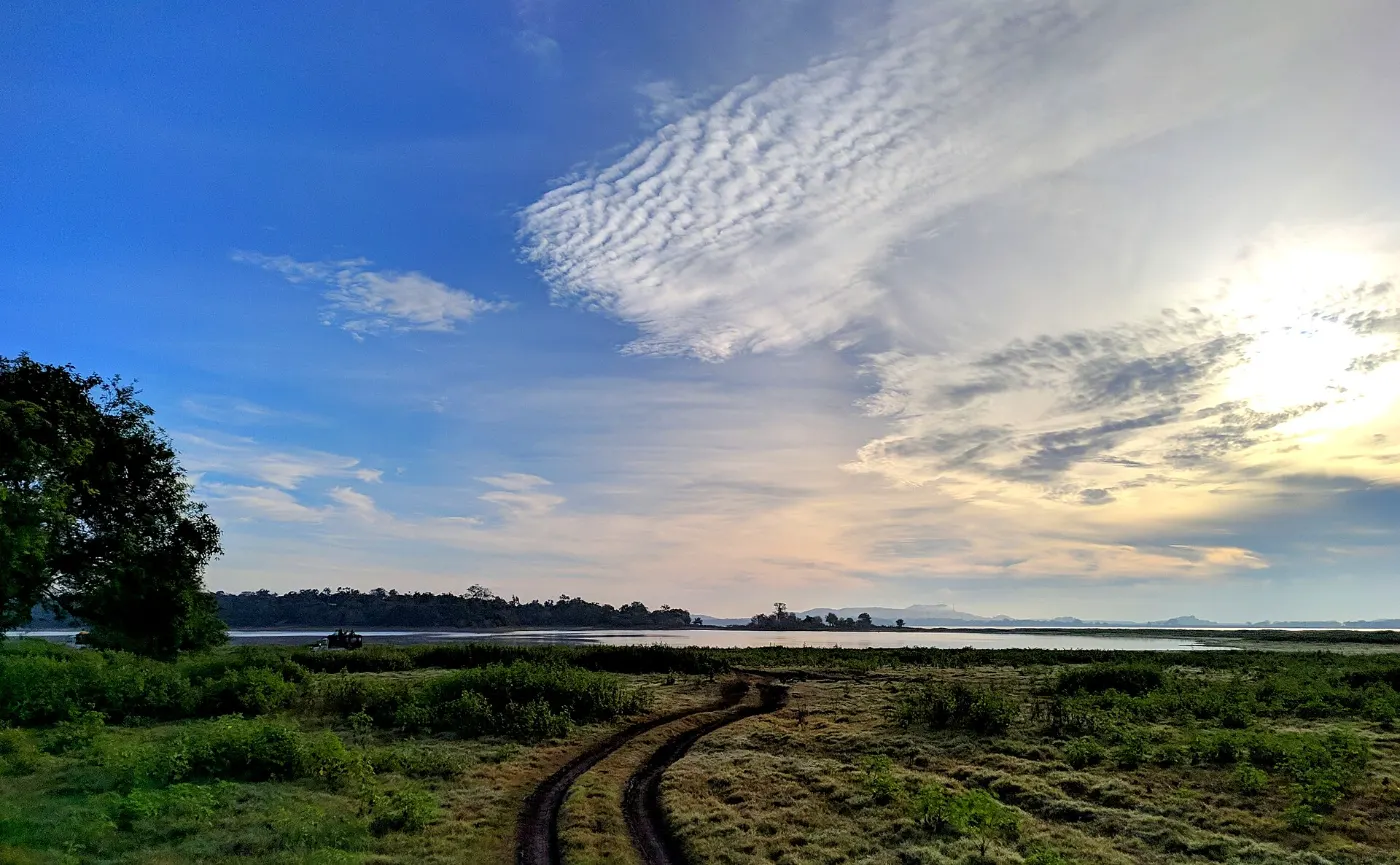
Minneriya is not wilderness in the untouched sense and that is what makes it extraordinary. The tank at its centre was built by King Mahasen in the third century as irrigation for the dry zone, and it has been holding water ever since. The park grew up around it, protected as a sanctuary and then declared a national park in 1997.
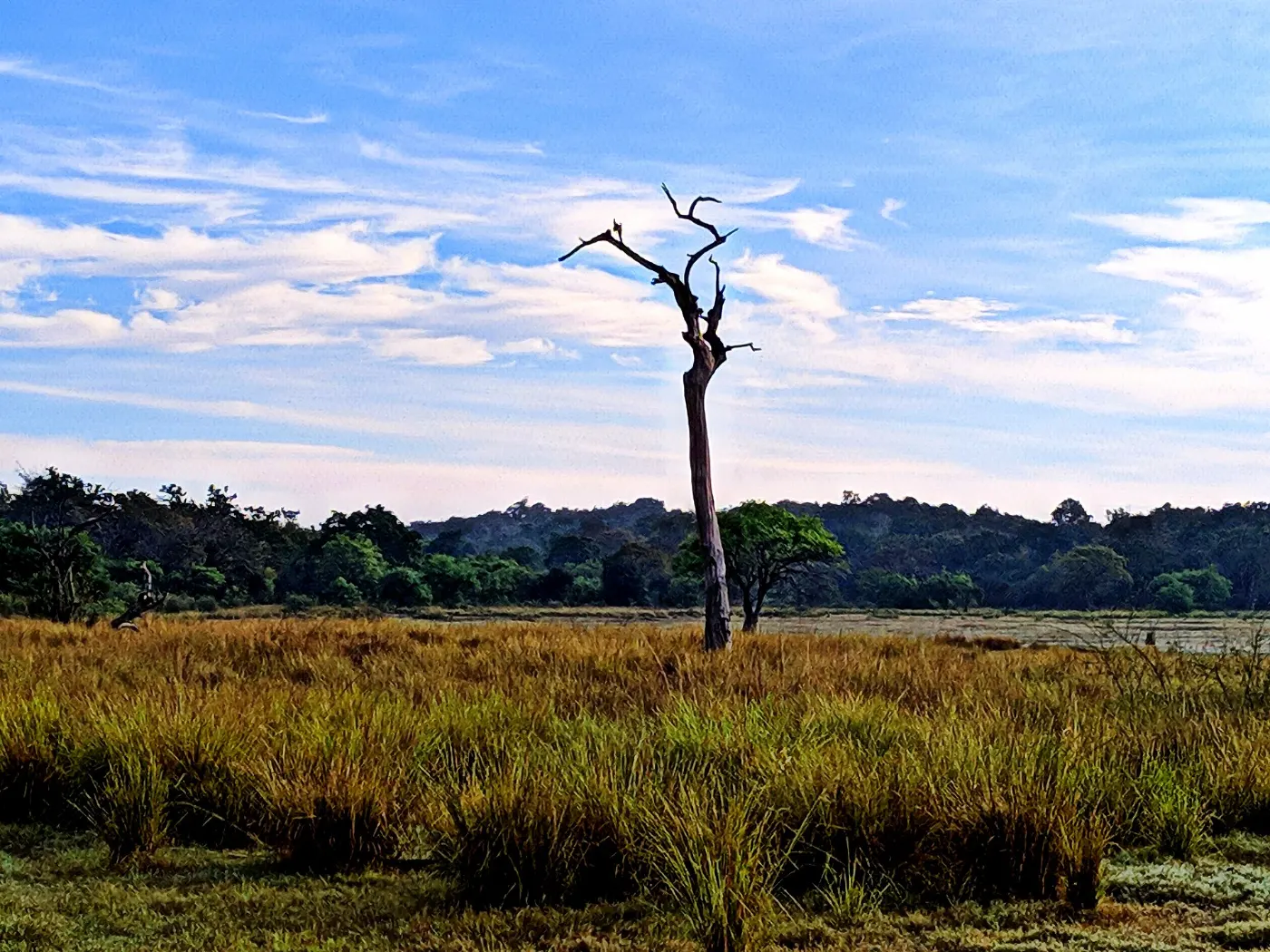
Roughly 8,890 hectares of dry evergreen forest, scrub and grassland ring the water. When the reservoir drops in the dry months it leaves a wide bed of fresh grass, which is the single reason for everything else on this page.
The park sits between Habarana and Polonnaruwa, about twenty minutes by road from Indigas wewa where our cottages are.
Why People Come
The Gathering, and When It Happens
As the dry season wears on, water and grazing disappear from the surrounding forest and the tank bed becomes the only green thing for miles. Elephants come to it, family group by family group, until there are hundreds of animals feeding within sight of each other.
It is the largest seasonal concentration of wild Asian elephants known anywhere, and it happens because of a reservoir somebody dug for rice.
| Roughly | What the tank is doing |
|---|---|
| May and June | Water starting to drop, grass appearing, numbers building |
| July to September | The peak in most years. The bed is wide open and the herds are on it |
| October | Tailing off as the first rains arrive and the forest greens up again |
| November to April | Elephants still present, spread out and in smaller groups. Water high |
This pattern is driven by rainfall, not by the calendar, so it shifts year to year and it has shifted a good deal in recent years. A wet August means the herds stay in the forest. A late monsoon means the gathering runs longer. Nobody can tell you in March what September will look like, and anyone who does is guessing.
One Population
Minneriya, Kaudulla and Hurulu, Three Parks One Herd
This is the part almost every article leaves out. Minneriya, Kaudulla and Hurulu Eco Park are not three separate elephant populations. They are three pieces of one range, and the animals walk between them as the water moves.
So the question is never really which park is better. It is which park the herd is in this week. In a year when Kaudulla holds water longer, Kaudulla is where the gathering happens, and everybody who booked Minneriya because that is the name they knew sees rather less.
The people who know are the drivers who were out yesterday. That is how we pick the park for our guests, rather than selling the same one all year.
Cost
Minneriya Entrance Fees, and How They Work
Entry to Sri Lankan national parks is set by the Department of Wildlife Conservation and revised by gazette. There is no figure printed on this page, and the reason is worth explaining.
We would rather give you the structure, which does not go stale, than a number we cannot stand behind.
| What | How it is charged |
|---|---|
| Park entrance | Per person, at the gate. Separate rates for foreign visitors, SAARC nationals and Sri Lankan residents, with young children usually free |
| Vehicle charge | Per vehicle entering the park, added to the entrance fee |
| Service charge and VAT | Added at the gate on top of the above. This is where most online quotes quietly differ |
| The jeep itself | Nothing to do with the park. Hired per vehicle from an operator, so sharing divides it |
When a tour is advertised at one price per person, it is these four things added together with a margin on top. Ask for them separately and you will know what you are paying for. We quote them separately.
On the Day
Timings, Duration and What to Expect
Two Slots a Day
Jeeps go in early morning, from around six, and mid afternoon, from around half past two. The park closes at dusk. Three hours inside is the standard run and it is long enough.
Afternoon for Elephants
Herds move down to the water as the heat drops, so the afternoon slot is the one for numbers and for photographs with decent light. Mornings are quieter, cooler and better for birds.
What Else Is There
Toque macaque, spotted deer, sambar, water buffalo, crocodile and a long bird list along the tank edge. Leopard and sloth bear are present and almost never seen, so do not go expecting them.
Jeep Etiquette
Sit down, keep your voice low and do not ask the driver to get closer. In a busy week a dozen jeeps can crowd one herd, which is bad for the animals and worse for your photographs. Good drivers hang back.
Twenty Minutes Away
Stay Close Enough to Go Twice
Our cottages are twenty minutes from the Minneriya gate. That is the difference between a safari being a day out and a safari being an afternoon.
The Park
Questions About Minneriya Park
What Is the Elephant Gathering in Sri Lanka?
The seasonal concentration of wild Asian elephants on the Minneriya tank bed during the dry months, when the receding reservoir leaves fresh grazing and family groups come out of the surrounding forest to feed. It is the largest known gathering of its kind anywhere.
What Is the Best Time to See Elephants in Sri Lanka?
Around Minneriya, the dry months build towards a peak that usually falls somewhere between July and September. It is driven by rainfall rather than by the calendar, so it moves. Elephants are present here all year, just more spread out when there is water everywhere.
How Big Is Minneriya National Park?
About 8,890 hectares of dry evergreen forest, scrub and grassland around the Minneriya tank. It was protected as a sanctuary before being declared a national park in 1997.
Is Minneriya Worth Visiting Outside the Gathering?
Yes, with different expectations. Out of season you see smaller groups rather than hundreds of animals, and you often have the park close to yourself. Some of the best afternoons we hear about from guests are the quiet ones in the wet months.
How Much Is the Minneriya National Park Entrance Fee?
It is set by the Department of Wildlife Conservation and revised by gazette, and we will not print a figure we cannot verify. It is charged per person, with different rates by nationality, plus a vehicle charge, a service charge and VAT. Message us with your dates and we will send the current figures.
How Far Is Minneriya From Sigiriya?
The park gate is about twenty minutes by road from our cottages at Indigas wewa. From Sigiriya village itself it is roughly twice that, which matters on a six o'clock start.