
Before Breakfast
Bird Watching in Sri Lanka, Starting in the Garden
There is no need to go anywhere to start. Sit outside your cottage with a cup of tea at 6am and the first 20 species come to you. After that there are tanks, forest edges and a national park, all inside half an hour.
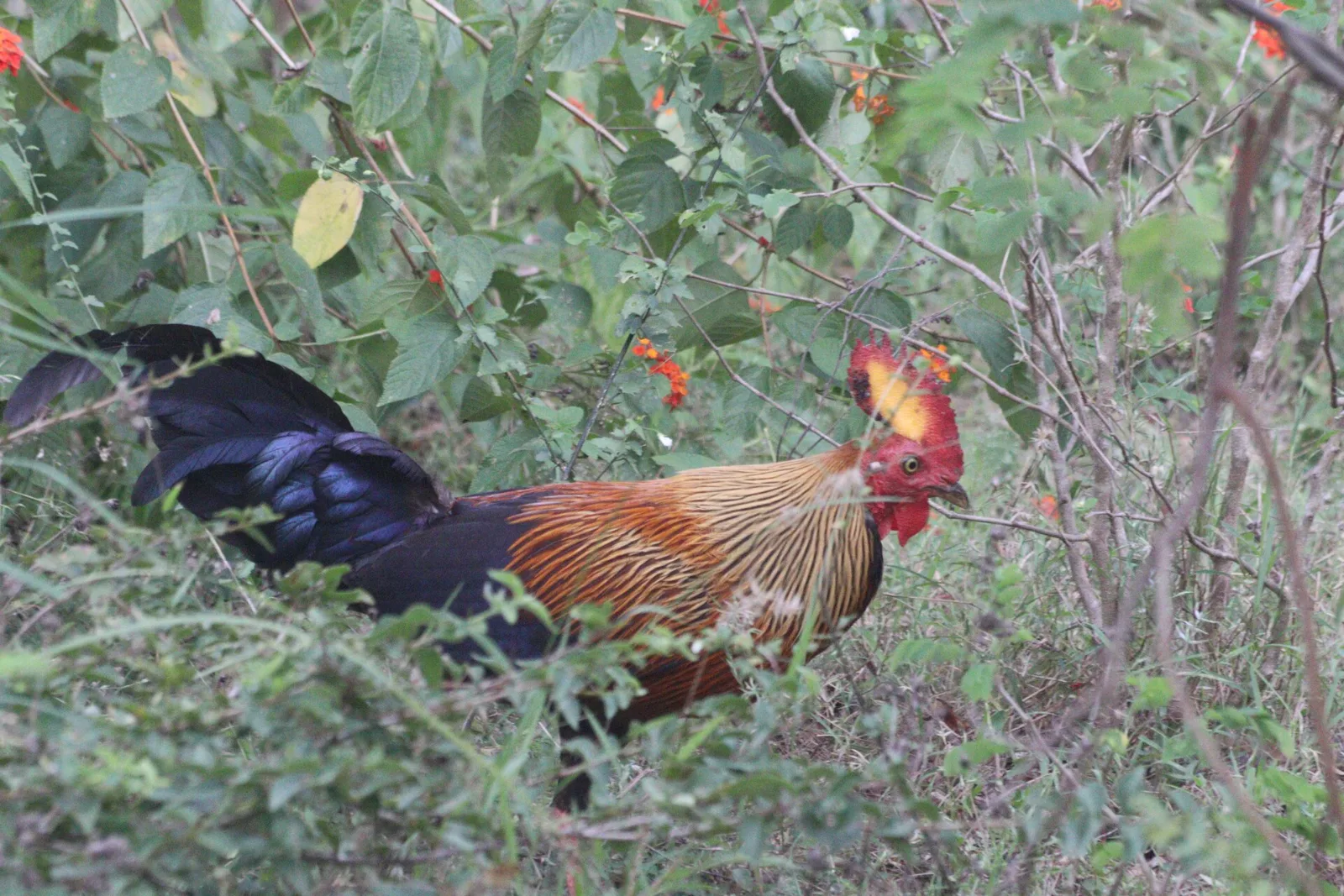
Sri Lanka has about 34 endemic birds, and the dry zone around Sigiriya holds a good share of them, the junglefowl crossing the track at first light among them. The best hours are the first two after dawn, and they start at your door.
Where You Are
Why the Dry Zone Around Sigiriya Counts
Most birding itineraries for Sri Lanka send you south into the wet zone rainforest, and they are right to. Sinharaja and Kitulgala hold the endemics that live nowhere else, and if your target is a full endemic list, you will need to go there.
What the dry zone gives you instead is volume and water. A thousand years of tank building left this landscape covered in shallow reservoirs, each one ringed with dead standing timber and fringed with scrub, which suits storks, raptors, kingfishers and everything that hunts a shallow edge. You will often see more individual birds in a morning here than in a day of peering into a rainforest canopy.
The forest here is real forest, and the cottages sit inside it rather than beside it, which is why the list below starts at your door.
Without Leaving
What Lives Around the Cottages
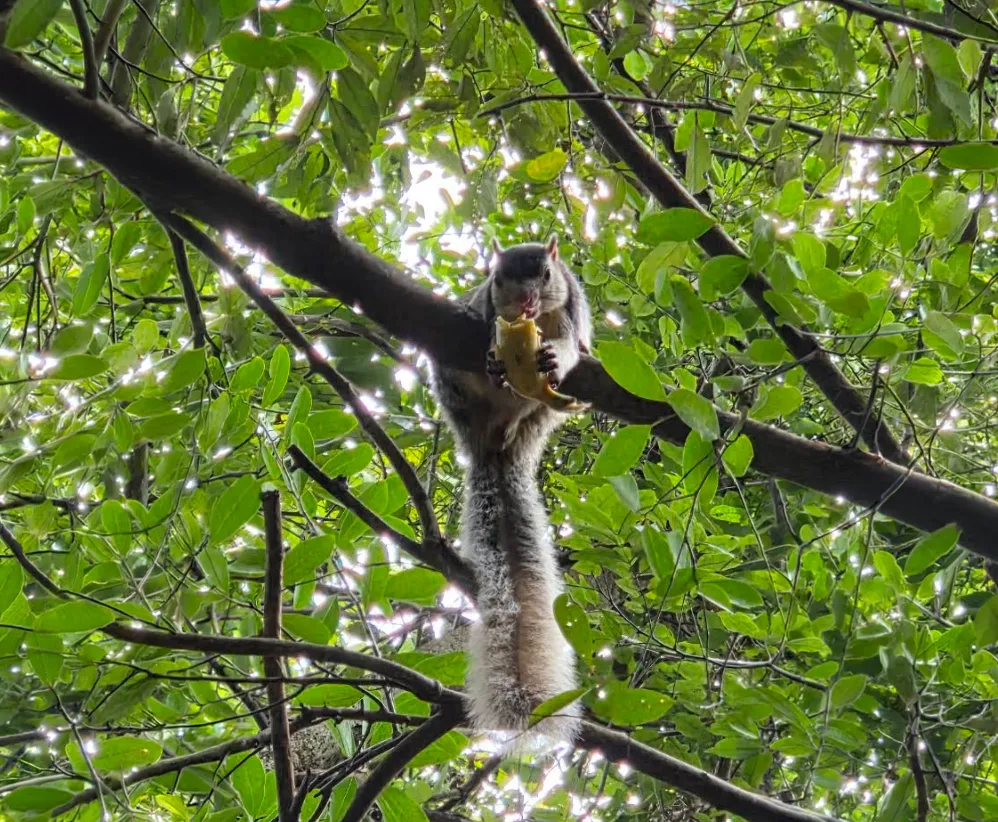
These are the birds and animals we see around the cottages and along the track out to the road. No list of wild creatures is a guarantee, but this is who lives here.
Take the tea out at 6.15am, because by 9am the heat has shut most of it down.
| Who | What | When to look |
|---|---|---|
| Sri Lanka junglefowl | Bird, endemic | First light, on the track and the scrubby edges |
| White-rumped shama | Bird | Dawn and dusk, heard from the undergrowth before it is seen |
| Mouse-deer (meeminna) | Mammal | Dusk, at the forest edge, about the size of a cat |
| Palm civet (urulawa) | Mammal | After dark, along branches and roof beams |
| Slender loris (unahapuluwa) | Mammal | Night, by torchlight in the trees, two eyes shining back |
| Wild elephants | Mammal | In the forest beyond the fence, mostly in the dry months |
Which species show up on any given morning is luck and season. Ask us what has been around that week and we will tell you, quiet weeks included.
20 Minutes Out
The Tanks, and the Water Birds
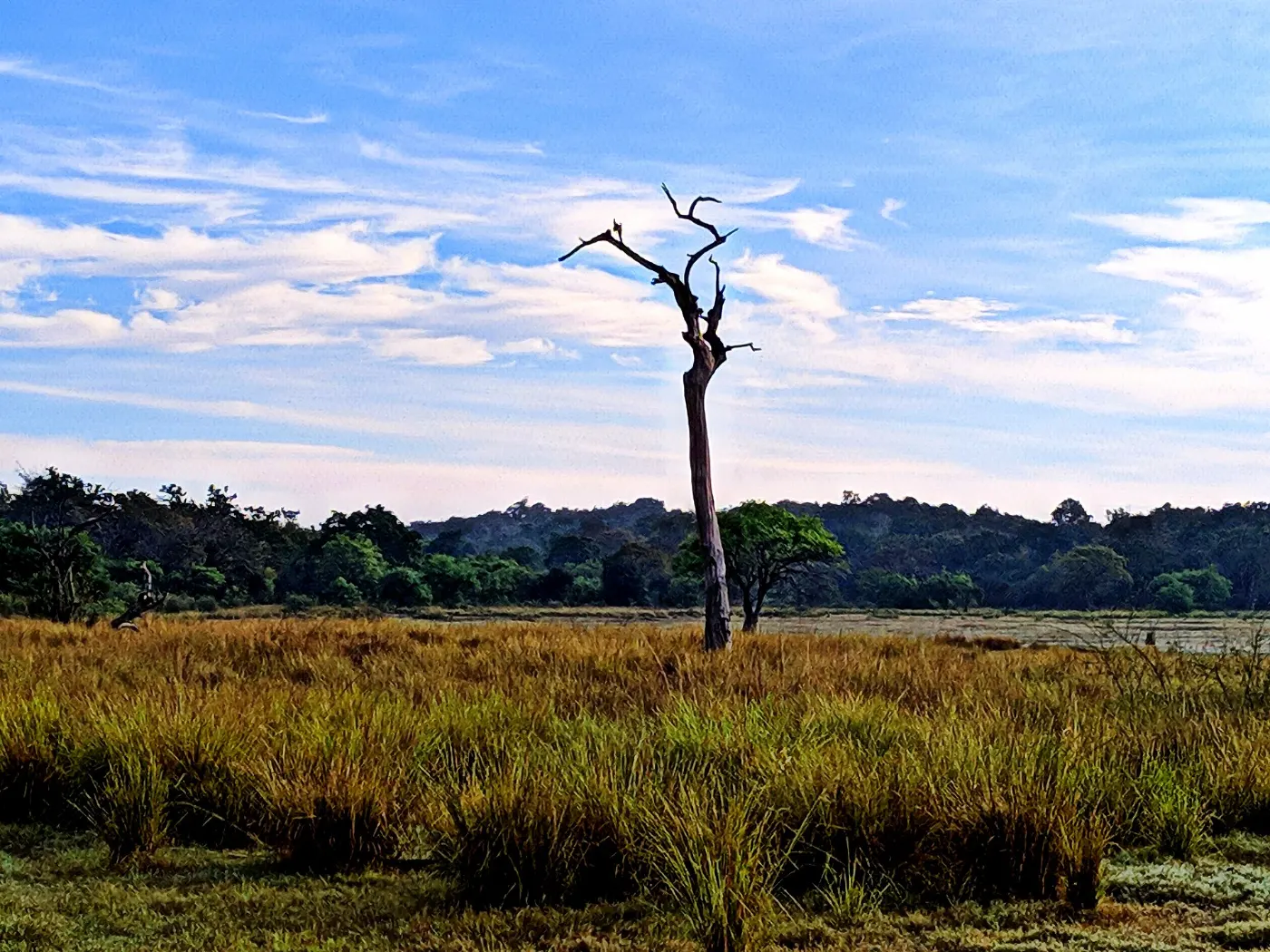
Minneriya, Kaudulla and the smaller village tanks in between are where the numbers are. Painted storks and Asian openbills work the shallows in loose flocks, spot-billed pelicans fish the deeper water, and lesser adjutants stalk about at the back looking prehistoric.
Raptors Over the Water
Grey-headed fish eagle and white-bellied sea eagle both hunt these tanks, and a serpent eagle is almost always somewhere overhead. The dead trees standing in the water are the place to scan, because everything that wants a view perches on them eventually.
The morning safari run is the birding one. The afternoon jeep is better for elephants, and if you are here two nights, doing one of each is the obvious answer.
Timing
When to Come for Birds
Two things move the list. The time of day, which matters enormously, and the migrant season, which matters if you want numbers.
First Light to 8am
From first light to about 8am is when everything is active and calling, and that window is the whole game. A lie-in costs you most of the day's birding, and by 11am the forest goes quiet until late afternoon.
The Migrant Months
Northern migrants arrive from September and stay into April, which adds waders, raptors, flycatchers and the Indian pitta that skulks about in leaf litter. The resident endemics are here all year and do not care what month it is.
After Rain
The wetter months are the ones most visitors avoid and the ones with the most going on. Everything breeds, everything sings, the tanks fill and the forest is loud. Rain here tends to be an afternoon event rather than a whole day.
Going Out
Birding Tours, and When a Guide Earns the Fee
For the garden and the track you need no guide. Take binoculars, sit still, be patient. Most of the endemics on this page can be found on your own if you are willing to get up early and wait.
A guide pays off in two situations. The first is the tanks and the park, where knowing which corner held the pelicans last week saves you 2 hours. The second is calls. A good local birder identifies four species by ear for every one you see, and that changes the size of your list completely.
Ask us before you arrive and we will tell you what guiding can be arranged and what it costs before you agree to anything. If you are planning a proper birding route across the island rather than a morning here, a driver who knows the sites is usually the better arrangement.
Bring your own binoculars, and a field guide if you have one.
Ask First
Tell Us What You Are Hoping to See
Send us your dates and your target species, and we will tell you what is realistic from here, what needs a trip elsewhere on the island, and whether the month you have picked is the right one. If Sinharaja is the better bet for your list, we will say so.
Birding Questions
Questions Birders Ask First
How Many Endemic Birds Does Sri Lanka Have?
About 34, though the exact count moves with the taxonomy you follow and one or two are still argued over. Most of them live in the wet zone rainforest in the south-west; the junglefowl in the table above is the one you will meet here first.
Can I See Endemic Birds Around Sigiriya?
Some, yes. Sri Lanka junglefowl is a regular on the track here, and the grey hornbill, brown-capped babbler and woodshrike are dry zone birds to look for in the scrub and at the tanks. For the full endemic list you need the wet zone forests as well, so plan a few nights there too.
What Is the Best Time of Day for Birdwatching?
First light until about 8am. Late afternoon, from 4pm until dusk, is the second window. The middle of the day in the dry zone is hot and quiet, and that is when everyone sensible is asleep, birds included.
Do I Need to Book a Birding Tour in Advance?
For the garden and the tracks, no. For a guided morning at the tanks or a jeep into the park, a day or two ahead is sensible, and more in the busy months. Message us before you arrive and we will have it arranged.
Is Birdwatching Here Good for Beginners?
Very. The dry zone is open country, so birds are visible rather than hidden in a canopy, and they are large and colourful enough to hold the attention of somebody who has never done this before. A rainforest is the harder introduction.
What Should I Bring?
Binoculars. Neutral colours, long sleeves for the mosquitoes at dusk, and a torch for walking back to your cottage at night. A field guide to the birds of Sri Lanka is worth its weight, and leeches are not an issue here the way they are in the wet zone.